Muslim Civic Coalition Hosts 2nd Annual Muhammad Ali Legacy Trip
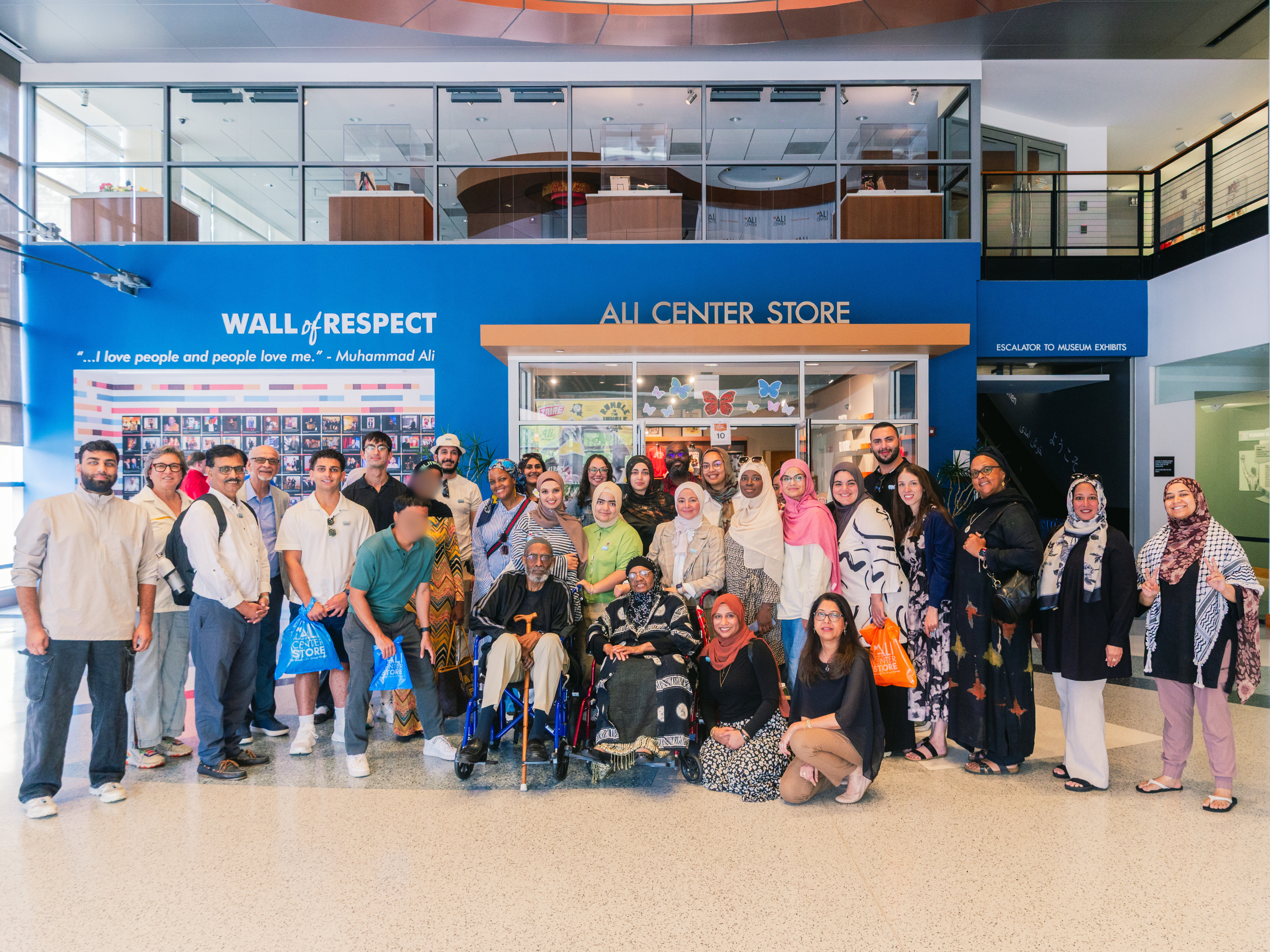
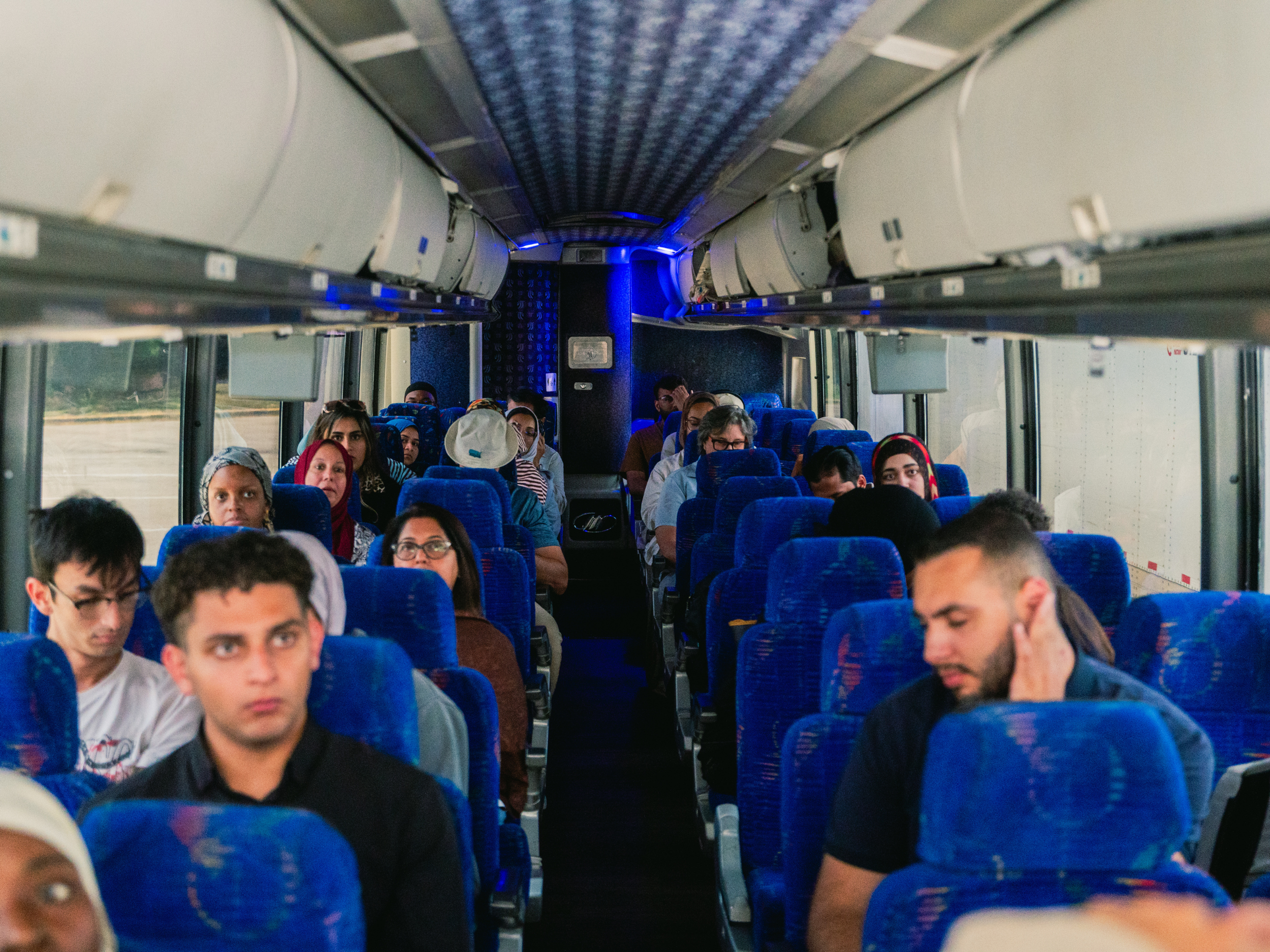
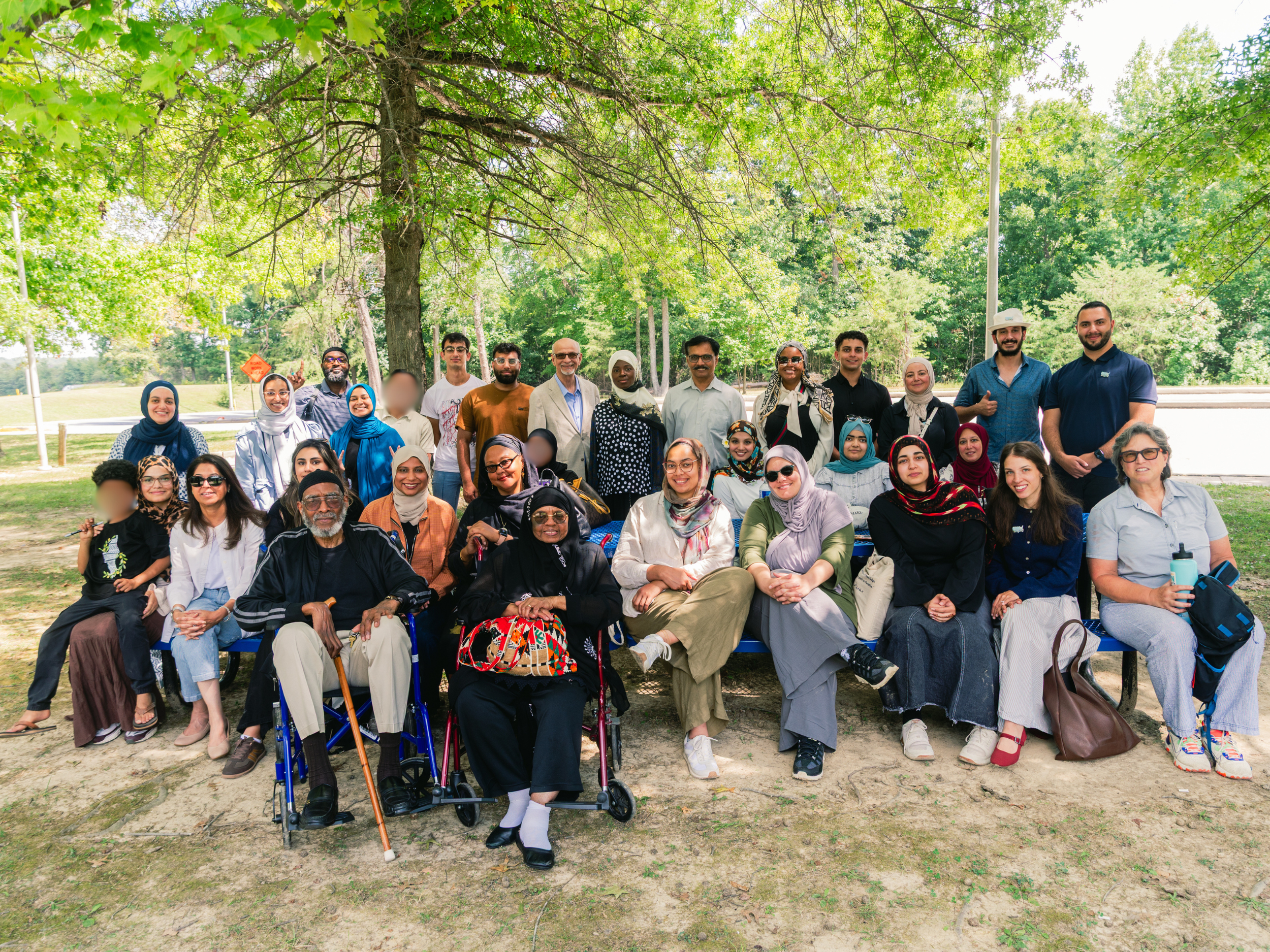
Louisville, KY - August 29-30, 2026 — Nearly 40 Muslim community leaders, faith leaders, organizers, educators, and partner organizations traveled from Chicago to Louisville for the Muslim Civic Coalition's second annual Muhammad Ali Legacy Trip: two days of faith, history, reflection, and civic responsibility.
America turned 250 this year. We marked it by honoring the legacies that carried us here.
That is the purpose of this trip. A 250th is a reckoning — an invitation to ask honestly whose story gets told and whose gets left out. Muslims are part of this history. So this summer we marched, we listened, and we honored our history. Louisville was the honoring Muhammad Ali’s legacy...
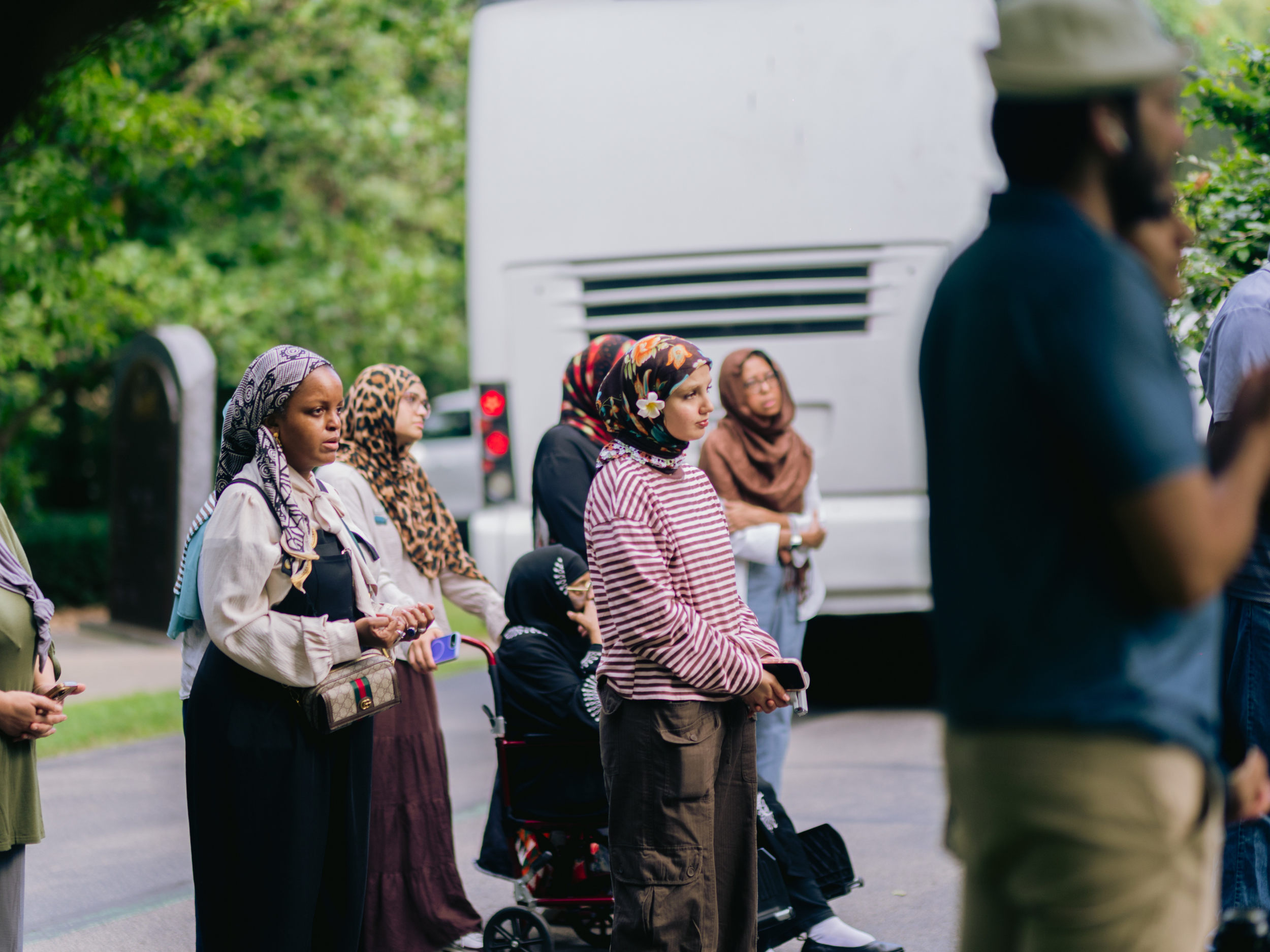
The delegation came from across our coalition — multiple partner organizations, several masjids, students and elders. For many, it was their first time at the Muhammad Ali Center. Some had known Ali only as a boxer, a poster, a quote on a wall. They left knowing him as a Muslim who lived his faith out loud, at cost.
Muhammad Ali is one of the most recognized Americans in history and one of the most consequential Muslims in ours. He claimed his name. He embraced his faith. He challenged injustice. He refused to participate in a war his conscience could not accept, and paid for that stand with his title and nearly his career. He showed a generation that faith and citizenship go hand in hand — that you do not have to leave your deen at the door to belong here.
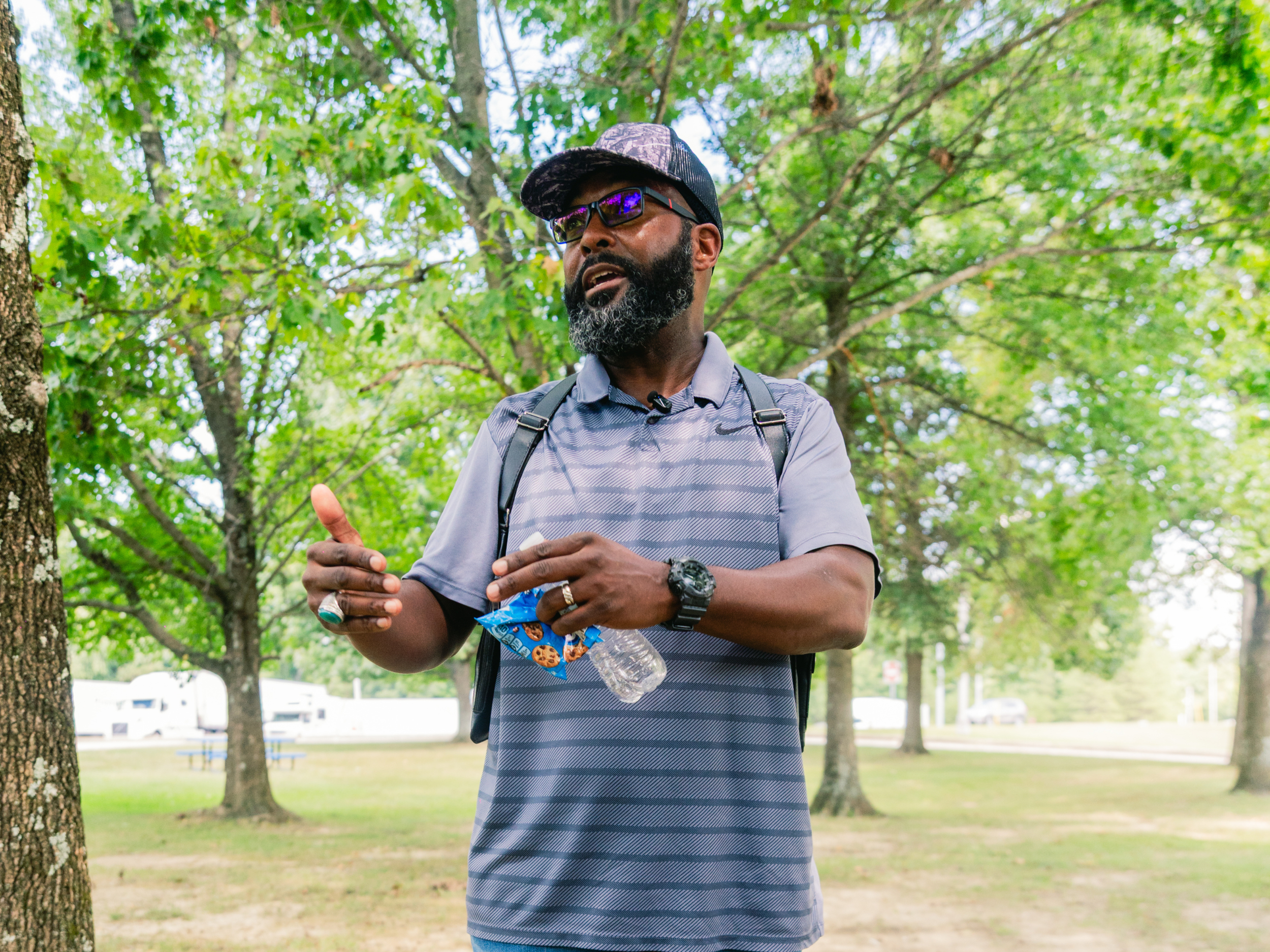
The journey began before dawn, as the group departed by bus from The Mecca Center. Along the way, Imam Dr. Tariq El-Amin grounded participants in Ali's life, faith, and evolution as a public figure, and in the broader history of African Americans and Black Muslims in this country — the people, movements, and circumstances that shaped Ali's convictions. The American Muslim story is, at its root, a Black Muslim story. That history belongs to all of us to learn, honor, and remember, and it framed everything that followed in Louisville.
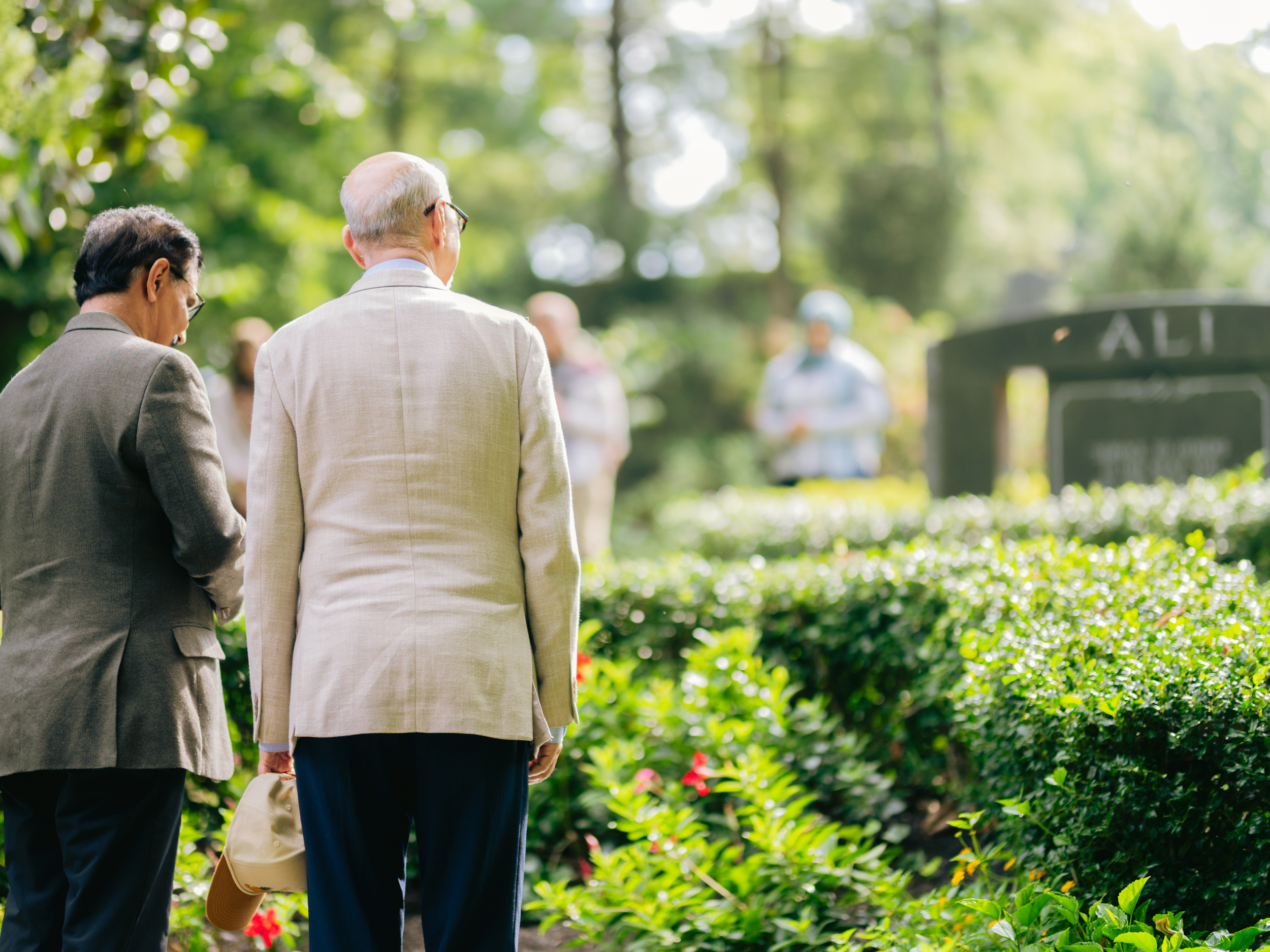
At Ali's gravesite, surrounded by trees and flowers, the group found a quiet space for reflection and du'a. A beehive hangs in the tree above the grave, marked simply "Ali's Bees," a nod to his famous line about floating like a butterfly and stinging like a bee. Inscribed on his memorial are words that capture the spirit of his life:
“Service to others is the rent you pay for your room in heaven.”
For the group, those words landed hard. Ali's service encompassed his humanitarian work, his commitment to civil rights, his generosity, his faith, his willingness to confront injustice, and his insistence on using his platform for something larger than himself. Service as rent is not a metaphor to Muslims. It is a description of the life we owe.
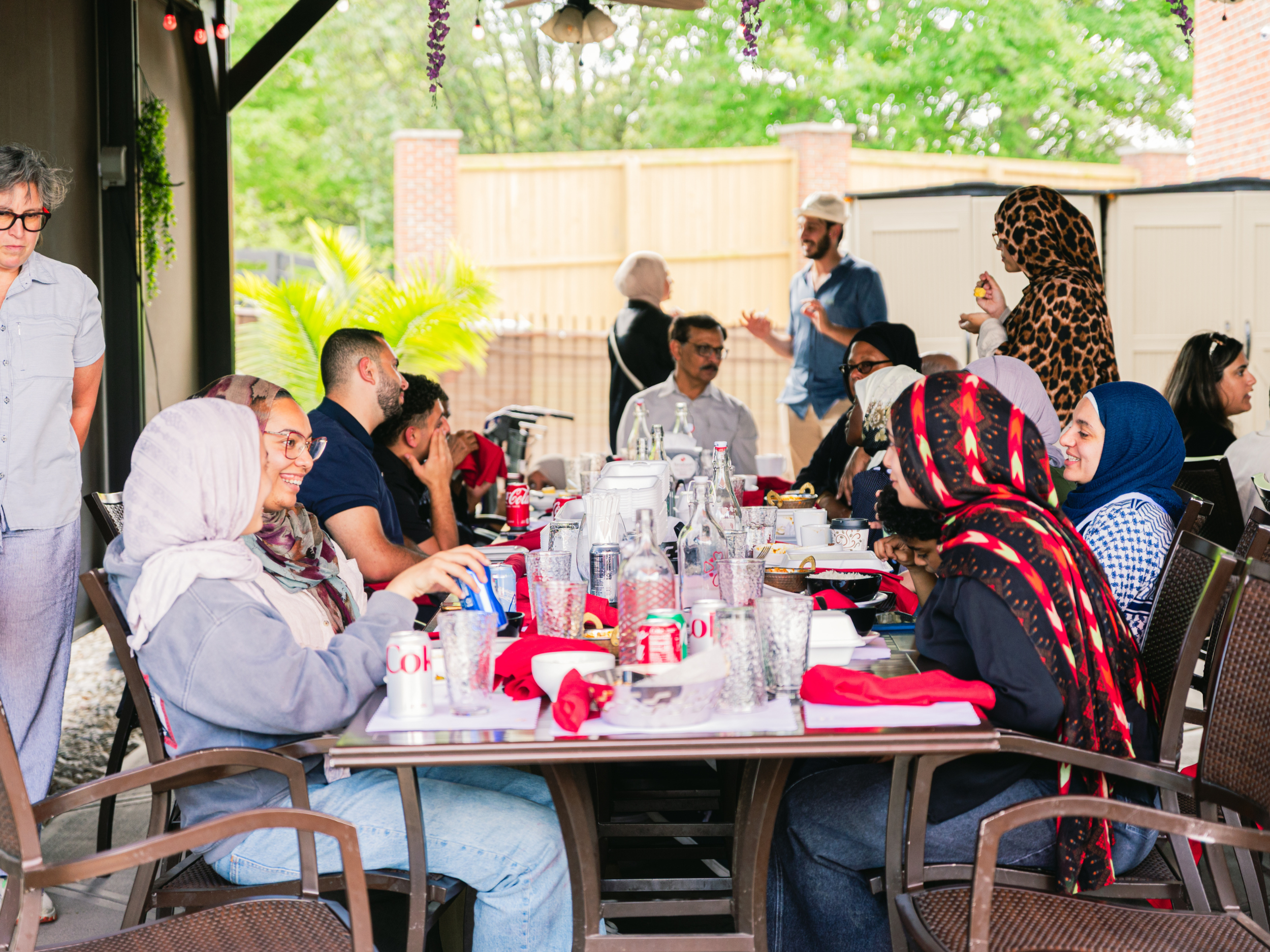
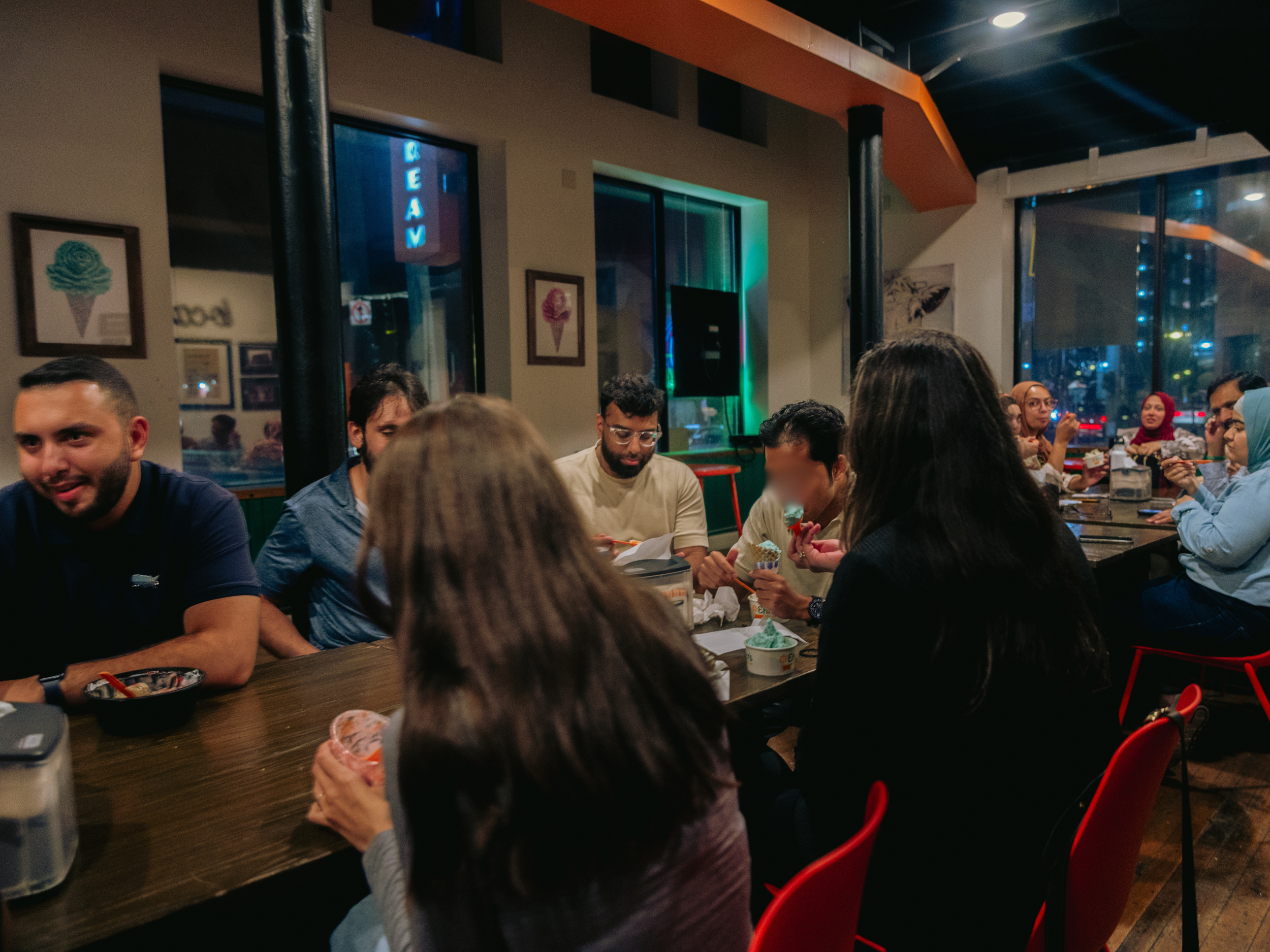
After checking into the hotel, participants gathered for a facilitated session led by Yaasha Abraham. The evening ended with dinner and open time to connect, rest, and enjoy the city together. Those informal hours mattered as much as the programming. Relationships were built over shared meals, long conversations, laughter, and late-night ice cream runs. Organizations that had only ever met over email met each other as people.
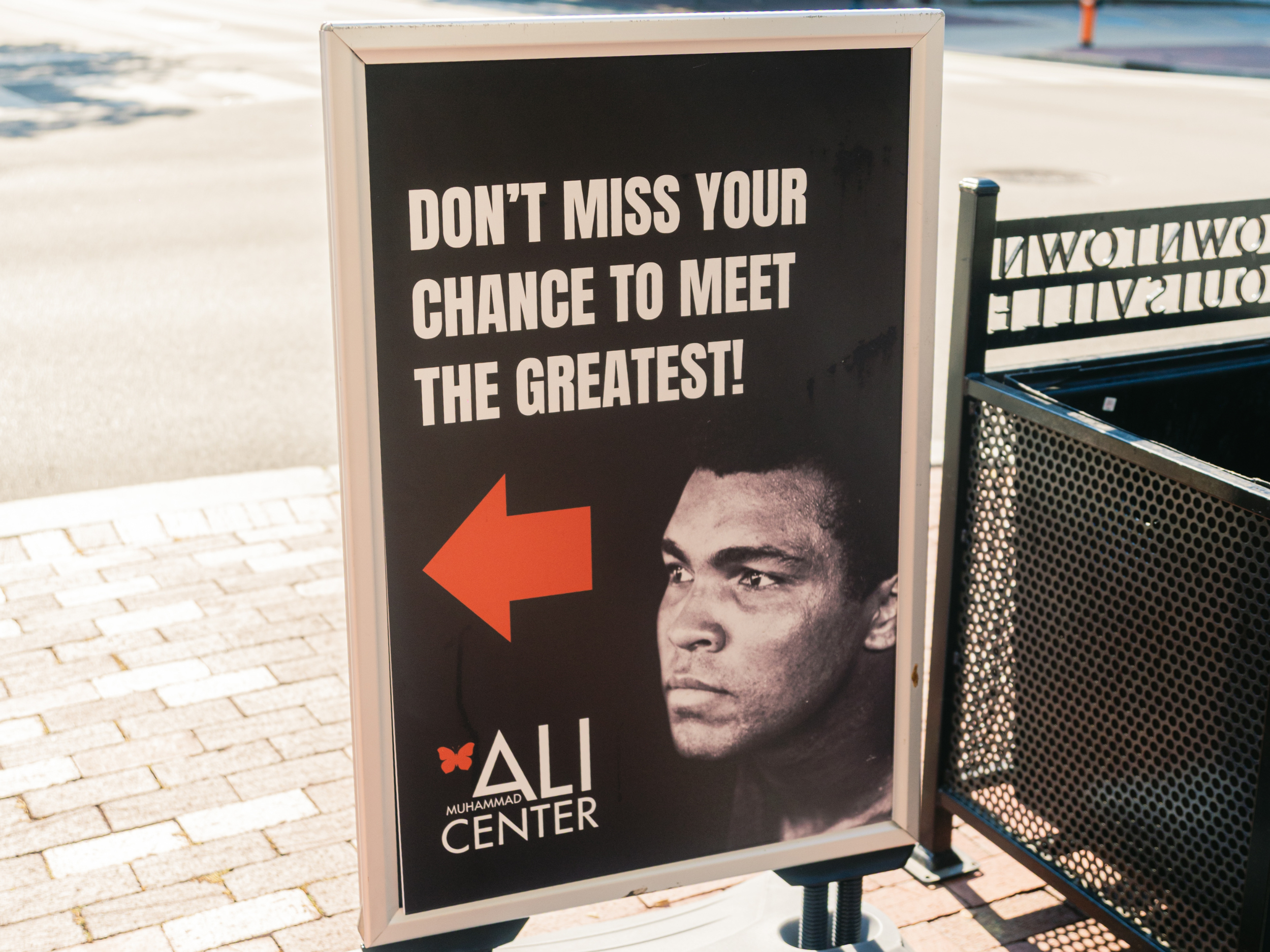
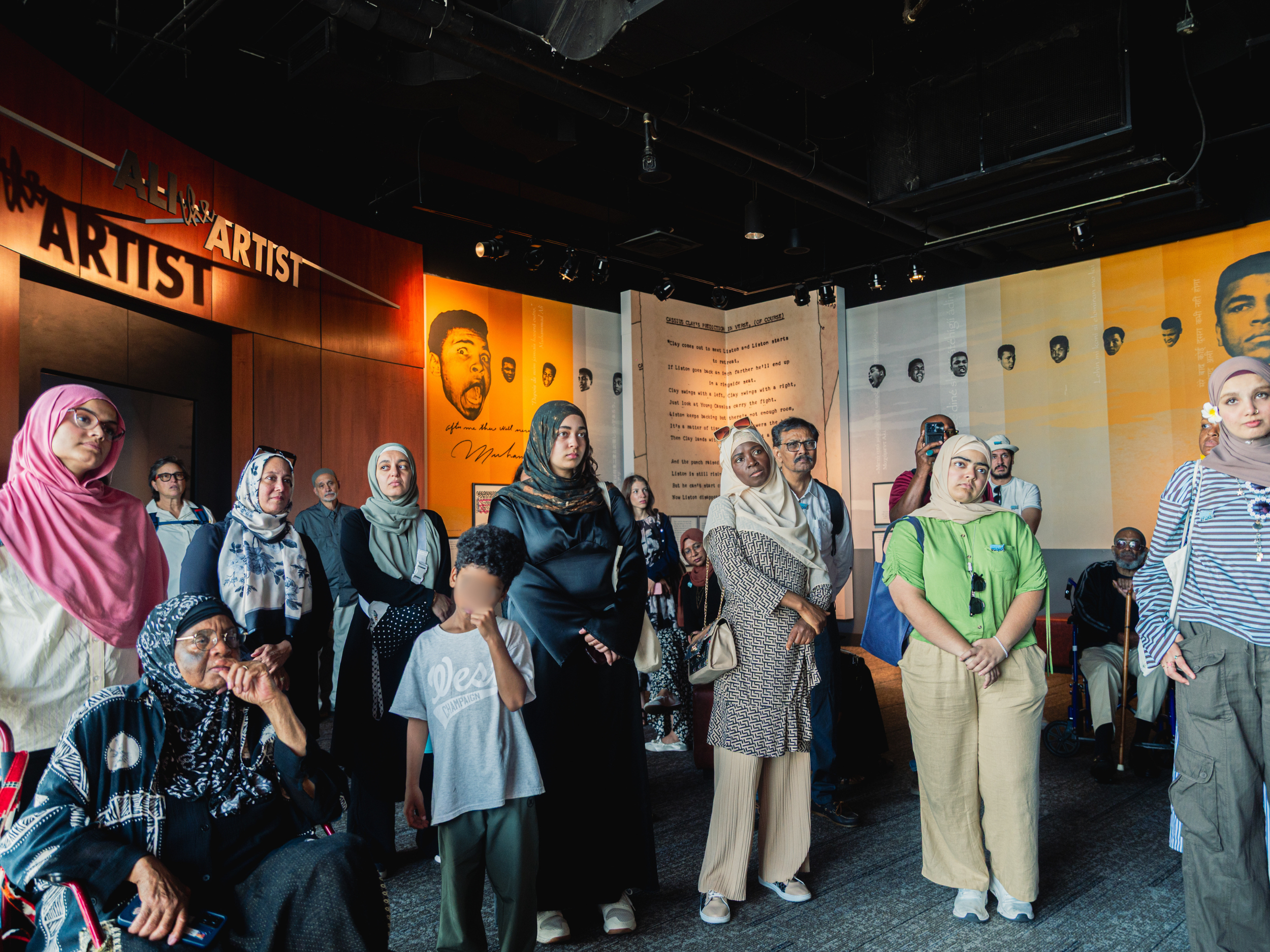
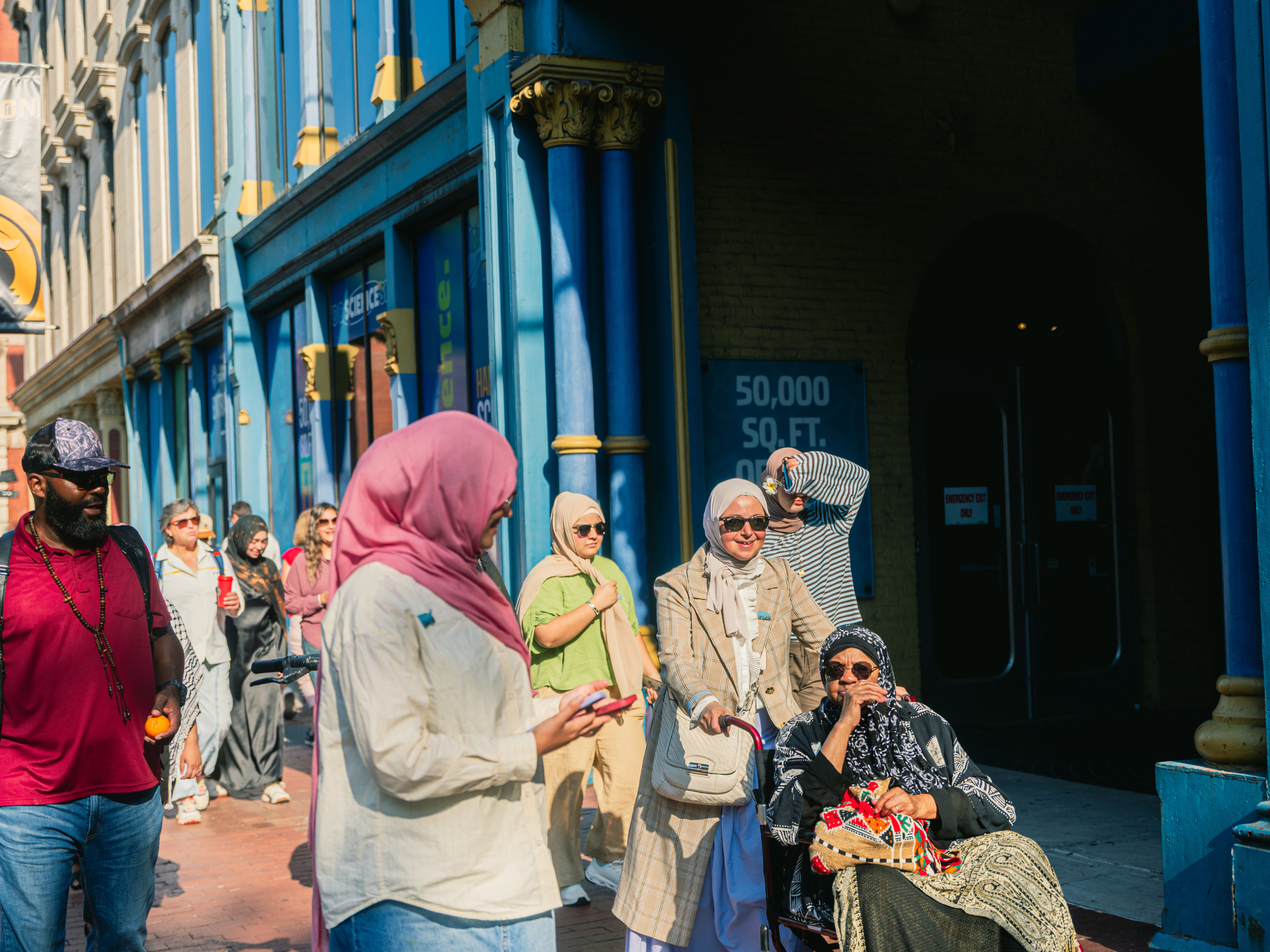
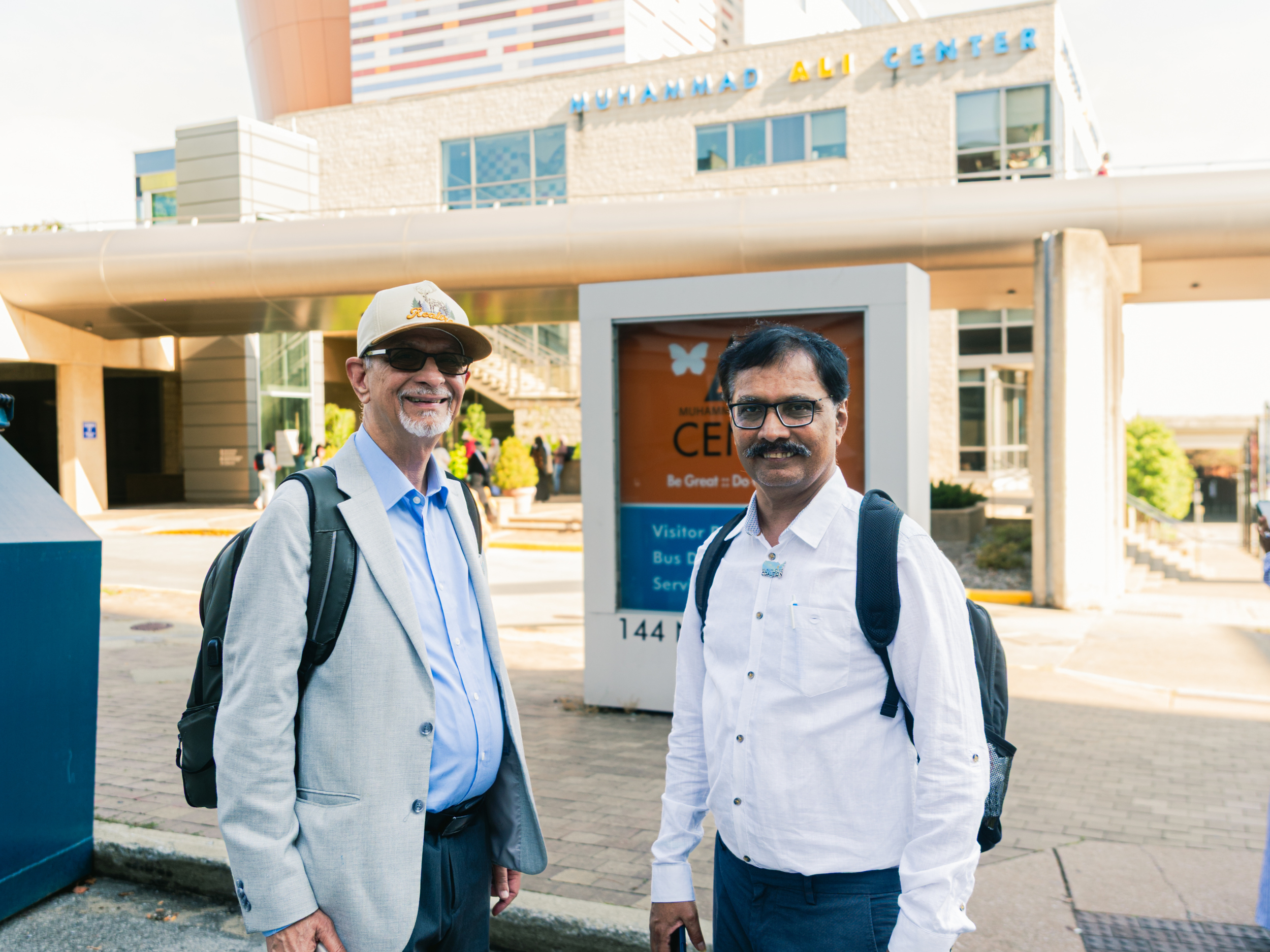
The next morning, the group walked to the Muhammad Ali Center in downtown Louisville, the institution created to preserve Ali's legacy and carry forward the values that defined his life. The delegation was joined by members of the Lexington Muslim community and by Dr. Ihsan Bagby, nationally recognized for his research on American mosques and Muslim communities in the United States.
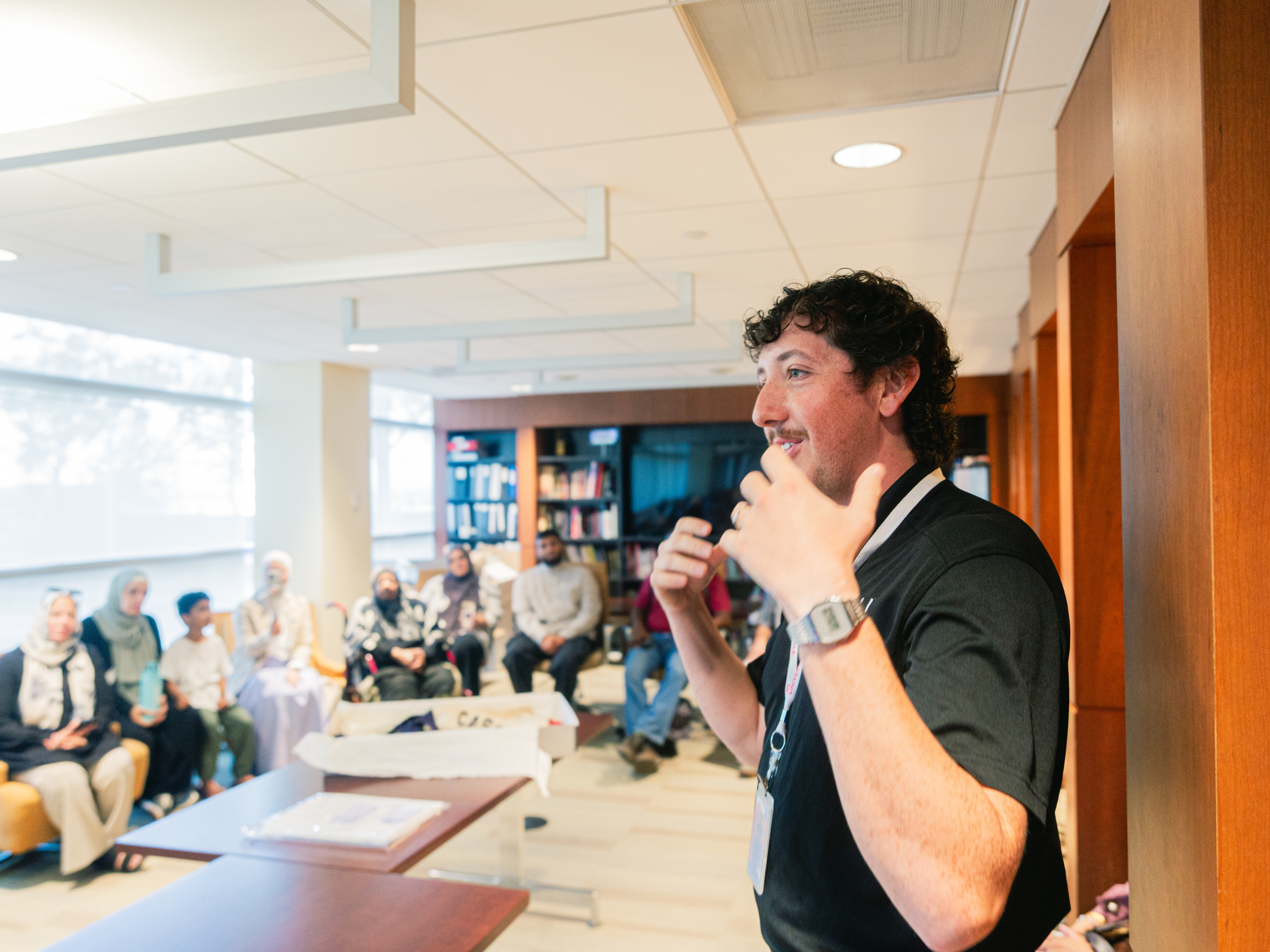
Participants received a special look at archival materials, including one of Ali's early boxing robes, material from his burial shroud, and artwork he drew himself. A guided tour followed through the Center's exhibits and the six principles that defined his life: Spirituality, Conviction, Confidence, Dedication, Giving, and Respect.
The tour closed with a reflective circle in the Center's prayer space. Participants named what they had learned, what had challenged them, and what they would carry home. Several spoke about conviction — what it actually costs, and whether they were prepared to pay it. Others spoke about seeing a Muslim life honored in a public American institution and what that did to their sense of belonging here. The conversation moved from admiration for Ali to accountability for themselves: their own leadership, faith, advocacy, and responsibility to their communities.
At the Muslim Civic Coalition, we honor Ali not as a monument of the past but as a mandate for the present: to bring our whole selves, faith included, into the work of building a more just democracy.
The Muhammad Ali Legacy Trip is how we learn from those who came before us, strengthen the relationships that sustain our communities, and return home with a renewed framework for courage, conviction, service, and leadership. Guided by our faith and strengthened by our solidarity, we don't just remember history. We take our place in it.