
From Listening to Pitching: The 2026 Fellowship Capstone
Chicago, Illinois — October 4, 2026
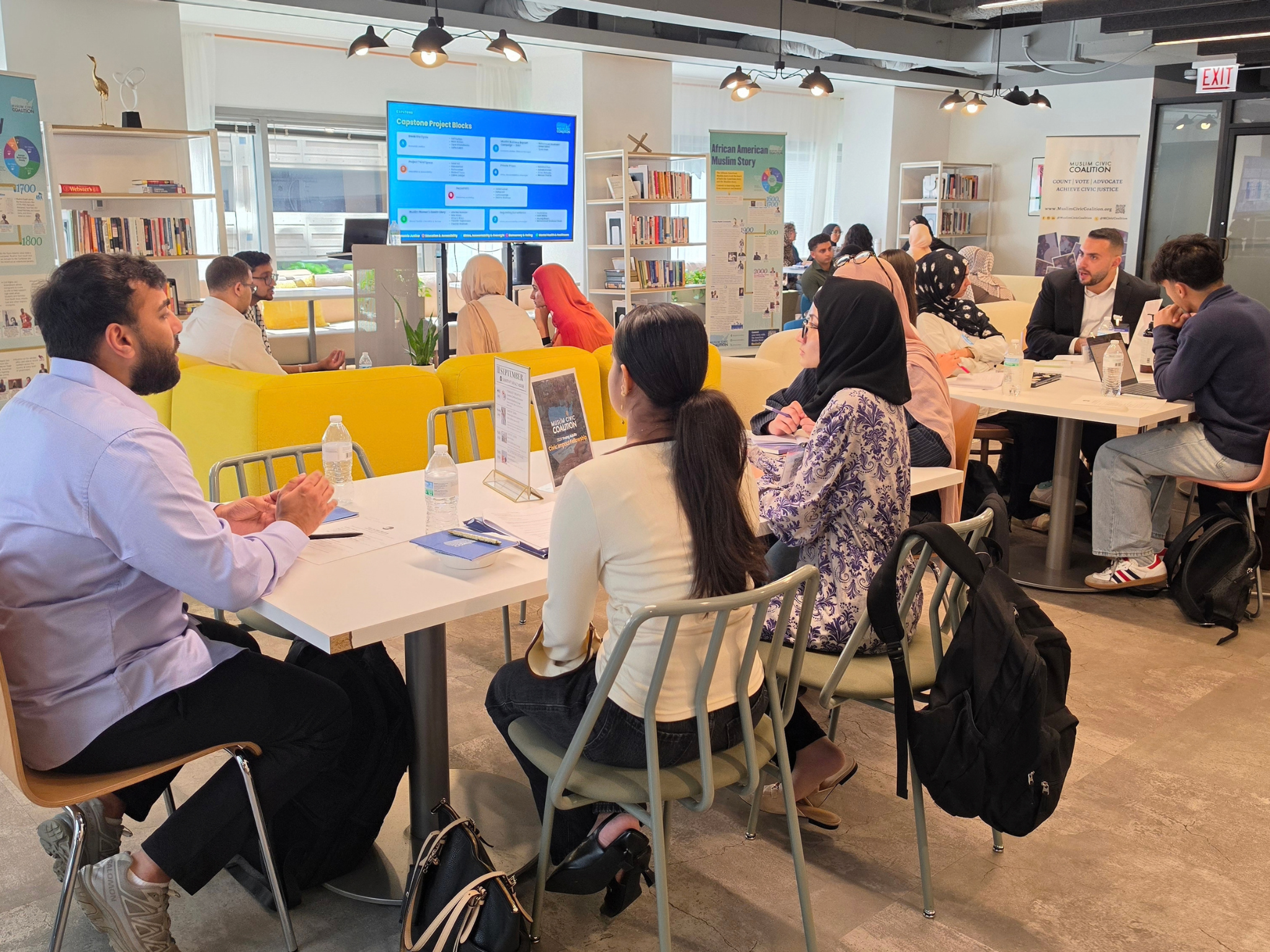
The 2026 Young Adults Civic Impact Fellowship has entered its final phase. Its 30 Fellows, representing communities across the country, are now applying six months of learning through Capstone Projects. Working in small groups, each team is tackling a real problem facing a real community. In recent weeks, groups have held stakeholder meetings with those closest to the issues to identify pressing needs and refine their approaches. In the weeks ahead, they will run small pilots and prepare to pitch their work to a panel of funders.
The capstone is where the full curriculum comes together. Narrative, data, media, history, policy, organizing, and electoral power are no longer separate areas of study but tools each group draws on as it works toward a single project. Fellows who began the year as strangers are finishing it as collaborators.
Practice, Not a Product Launch
The capstone is the Fellowship’s experiential learning project. Its goal is not to launch a new organization but to give Fellows practice applying the full curriculum to one real issue, so that every Fellow leaves able to design, budget, and pitch a civic project of their own.
“This distinction matters because our communities have never lacked good ideas,” said Mohammad Atiya, Fellowship Lead. “What they need are leaders who know how to listen before they build, test an idea against reality, and make a credible case for support, and the capstone gives Fellows a structured space to develop those skills with mentorship along the way.”
Building on What Came Before
Each part of the Fellowship supplies one element of the capstone, so Fellows are building on everything the cohort has learned together since Immersion Day.
Public Narrative grounded Fellows in connecting the story of self, us, and now.
Data & Research rooted their understanding of American Muslims in evidence rather than stereotype.
Media & Framing prepared them to speak on behalf of a community and frame issues with care.
History centered the contributions of African American Muslims and the stories that have too often been erased.
Policy showed how lived experience becomes a bill, a campaign, or a law.
Organizing & Power demonstrated how organized people build lasting power.
Electoral Strategy explored how leaders can pressure institutions from the outside or take a seat at the table.
The capstone asks Fellows to use all of these tools at once—the same demand real civic work places on leaders every day.
The Capstone Groups
This year’s Fellows formed seven groups of their own choosing, each selecting a problem they had seen firsthand in their communities. They then used data and research to test whether their initial plans held up, so every project is grounded in both evidence and lived experience. The resulting projects span economic justice, education and accessibility, ethics and accountability, democracy and voting, and mental health and healthcare.
Three groups illustrate the range of the work:
DemoVOTE is working to increase Muslim civic participation by developing a first-of-its-kind Civics 101 Workshop for Imams and religious leaders across Illinois, using Junaid Ahmad’s recent congressional campaign as a case study.
Break the Cycle is addressing inequality in higher education access for first-generation immigrant students through financial aid workshops, a scholarship, and a peer mentorship program.
The Nisa Initiative is working to destigmatize menstruation and expand health education for Muslim women through a workshop featuring Alimah speakers and medical professionals, along with conversation cards on menstruation and mental health.
In recent weeks, each group has met with stakeholders to refine its approach. Those conversations are now shaping the pilots the groups will run in the weeks ahead.
Investing in What Comes Next
More than half of Illinois Muslims are under the age of 35. The Fellows pitching in December are the organizers, advocates, and public servants who will shape our community’s civic future. Through the capstone, they will leave the Fellowship having already practiced listening to a community, testing an idea, and making the case for it in front of people ready to help.
The Fellows will also join us at the State of the Coalition fundraising brunch, Faith in Action, where community members can meet them, hear about their capstone projects, and see firsthand what investing in young leaders makes possible. Every Fellow in this cohort has been trained, mentored, and supported because members of our community chose to invest in the Coalition’s work. The brunch is an opportunity to ensure the next cohort has that same foundation.
“Our faith has never asked us to stand on the sidelines; it calls us to serve, to stand for justice, and to care for the communities around us,” said Mohammad Atiya, Fellowship Lead. “These Fellows have spent the past six months learning how to put that faith into action, and Faith in Action is a chance for our community to do the same by showing up, meeting these young leaders, and investing in the work that will carry our community forward.”
We are grateful to the community partners, mentors, and advisors supporting each group as their projects take shape.
Ways to Plug In
Share your expertise with future cohorts as a mentor, speaker, or capstone panelist by contacting CivicFellowship@MuslimCivicCoalition.org
Attend Faith in Action to meet the Fellows and learn about their work.
Invest in the next generation that prepares young Muslim adults to lead.